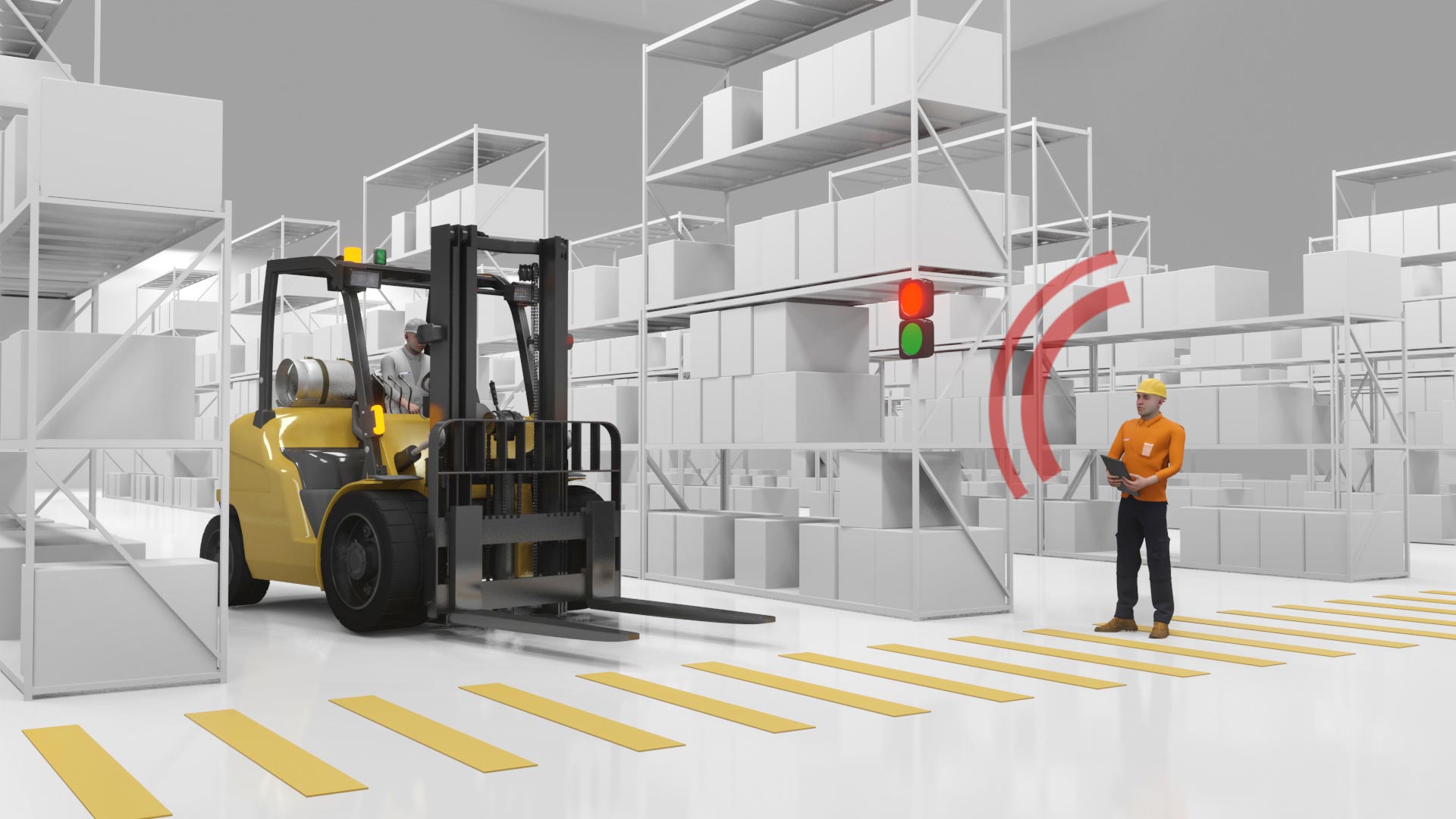
01 — Traffic Safety Assessment
Forklift-pedestrian safety assessment
A focused evaluation of your facility traffic patterns, interaction zones, and engineering control opportunities. Not a general safety audit — a traffic-specific assessment.
02 — The Risk
80%
of forklift incidents involve a pedestrian
OSHA 1910.178 is the #8 most-cited workplace violation.
The risk is not random. It concentrates at predictable locations — blind corners where sightlines disappear, dock crossings where pedestrian paths intersect forklift lanes, shared aisles where foot traffic and equipment compete for the same space.
These are not freak accidents. They are engineering gaps. A forklift that cannot see a pedestrian will not stop for one. A pedestrian who cannot hear a forklift approaching will not move. The solution is not more training — it is engineering controls that intervene before contact happens.
The assessment identifies exactly where those gaps exist in your facility — and what engineering solutions close them.
03 — Your Deliverables
A written plan. Not a sales pitch.
Facility Traffic Map
Complete documentation of every forklift-pedestrian interaction zone, blind corner, and high-traffic crossing in your facility.
Risk Scoring
Each zone scored by frequency of interaction, severity potential, and current control adequacy. Priority-ranked for action.
Engineering Recommendations
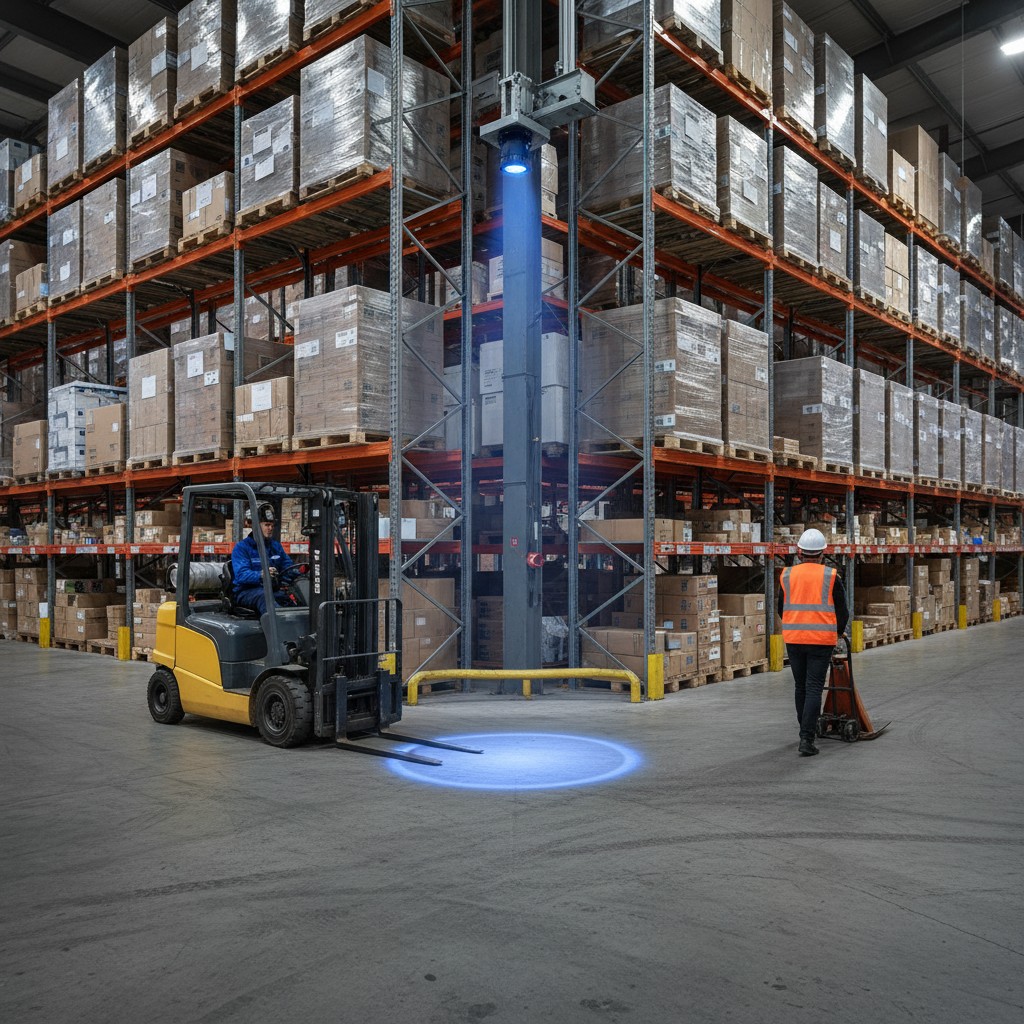
Specific engineering controls recommended for each zone — detection, speed management, visual alerts, gate arms, projectors.
OSHA Compliance Brief
How your current setup maps to 1910.178 requirements. What is covered, what is exposed, what needs attention.
04 — How It Works
Four steps. Two weeks.

IES engineer conducting on-site facility assessment
Day 1-2
Schedule & Prep
We review your facility layout, forklift fleet size, shift patterns, and any existing safety measures. No paperwork from you — just a phone call.
Day 3-5
On-Site Walk
Our engineer walks every aisle, intersection, and dock crossing. We document interaction zones, blind corners, traffic patterns, and current controls.
Day 6-8
Analysis & Design
We score each zone, map the traffic patterns, and design specific engineering controls for your layout. Detection ranges, speed zones, gate positions, projector placements.
Day 9-10
Written Report
You receive a complete traffic safety assessment with zone-by-zone recommendations, priority rankings, estimated costs, and an implementation timeline.
05 — Scope
What This Covers
- ✓Forklift-pedestrian traffic patterns
- ✓Interaction zone identification
- ✓Blind corner and dock crossing analysis
- ✓Speed zone recommendations
- ✓Gate arm and projector placement
- ✓OSHA 1910.178 compliance mapping
What This Does Not Cover
- ✕General facility safety audits
- ✕Fire suppression or electrical systems
- ✕Structural engineering
- ✕Non-forklift vehicle traffic
- ✕Employee training programs (though we can recommend these separately)
Get Started
No cost. No obligation. Real answers.
Most facilities discover 3-5 unaddressed interaction zones in the first walk-through.
How it works
Answer 7 quick questions about your facility and get an instant risk score with tailored recommendations.
- Evaluate your facility type, fleet size, and traffic patterns
- Instant risk score from 1–10
- Tailored engineering control recommendations
Takes about 2 minutes · No obligation