01 — Speed Control Technology
Warehouse Speed Management | Forklift Speed Control
Automated zone-based speed management that controls forklift speeds throughout your facility — no driver input required.
01 — Speed Control Technology
How Does Zone-Based Speed Management Work?
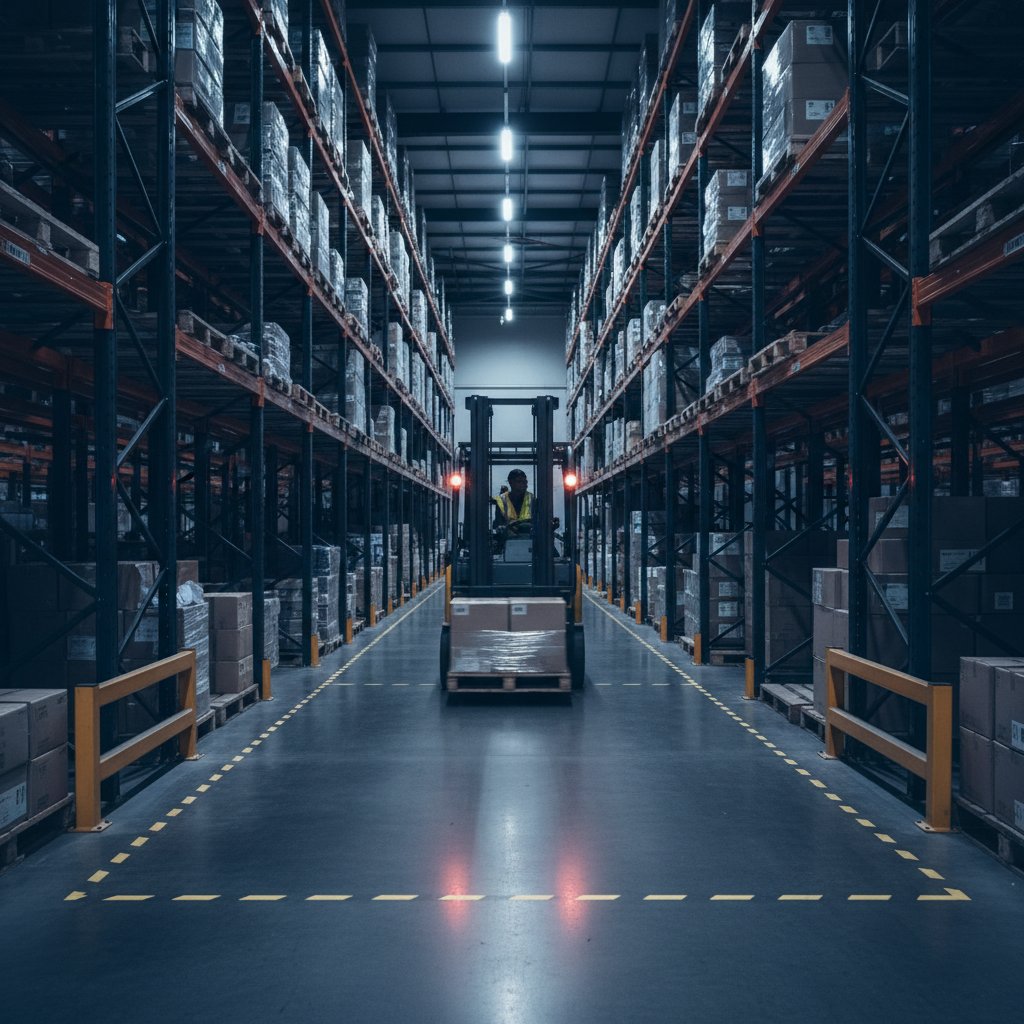
GPS coordinates and RFID tag infrastructure create invisible speed enforcement zones mapped to your facility layout. Each forklift is equipped with a Guardian controller that receives zone signals and overrides the throttle to enforce the speed limit for that zone.
When the forklift exits the zone, normal operating speed resumes. Zone boundaries are defined during configuration and can be adjusted after installation without hardware changes.
Multiple speed tiers can be configured: a main aisle might allow 8 mph, a pedestrian crossing zone 3 mph, a blind corner approach 2 mph. The system operates transparently to the driver — the forklift simply cannot exceed the zone limit, regardless of throttle input.
02 — Deep Dive
Why Does Automated Speed Control Work Better Than Speed Limit Signs?
Posted speed limit signs rely on driver compliance, and compliance degrades under production pressure, time constraints, and familiarity with routes. Automated speed management removes the human variable entirely — the forklift's throttle is overridden by the Guardian controller, so driver intention is irrelevant to zone compliance.
This matters most at the highest-risk locations: blind corners, dock crossings, and pedestrian-dense zones where a single speed violation creates maximum exposure. Automated enforcement also creates defensible documentation that speed controls are in place and functioning — relevant for OSHA citations under 29 CFR 1910.
178.
03 — Implementation
How Are Speed Zones Configured for Your Facility?
Every facility has different speed requirements based on traffic density, sight lines, pedestrian activity, and operational priorities. IES conducts a facility traffic assessment — mapping forklift travel paths, documenting intersection volumes, identifying blind spots, and characterizing pedestrian traffic patterns.
From this data, we define speed zones appropriate to each area's risk profile: higher limits for clear main aisles, reduced zones at intersections, strict zones at blind corners and dock crossings. Zone limits, boundaries, and forklift assignments are all configured in Guardian's management software.
After deployment, zone parameters can be updated as facility layout changes — a new racking installation or changed workflow does not require hardware reinstallation.
Frequently Asked Questions
Get Started
Ready to eliminate your blind spots?
How it works
Answer 7 quick questions about your facility and get an instant risk score with tailored recommendations.
- Evaluate your facility type, fleet size, and traffic patterns
- Instant risk score from 1–10
- Tailored engineering control recommendations
Takes about 2 minutes · No obligation