01 — Dock Operations
Loading Dock Safety Systems | Dock Traffic Control
Traffic control, visual alerts, and vehicle detection systems engineered for the high-traffic, high-risk environment of loading dock operations.
01 — Dock Operations
What Makes Loading Docks the Highest-Risk Area in a Facility?
Loading docks concentrate multiple hazard sources into a confined space: trucks backing into bays with limited visibility, forklifts traveling at speed to retrieve or stage loads, pedestrians moving between dock doors and staging areas, and bay doors opening and closing during active operations. The combination of limited sight lines, vehicle motion in multiple directions, and time pressure from delivery schedules creates conditions where incidents happen quickly.
OSHA 1910. 178 consistently appears in dock-related citations because dock traffic management requires active engineering controls — not just training and floor markings.
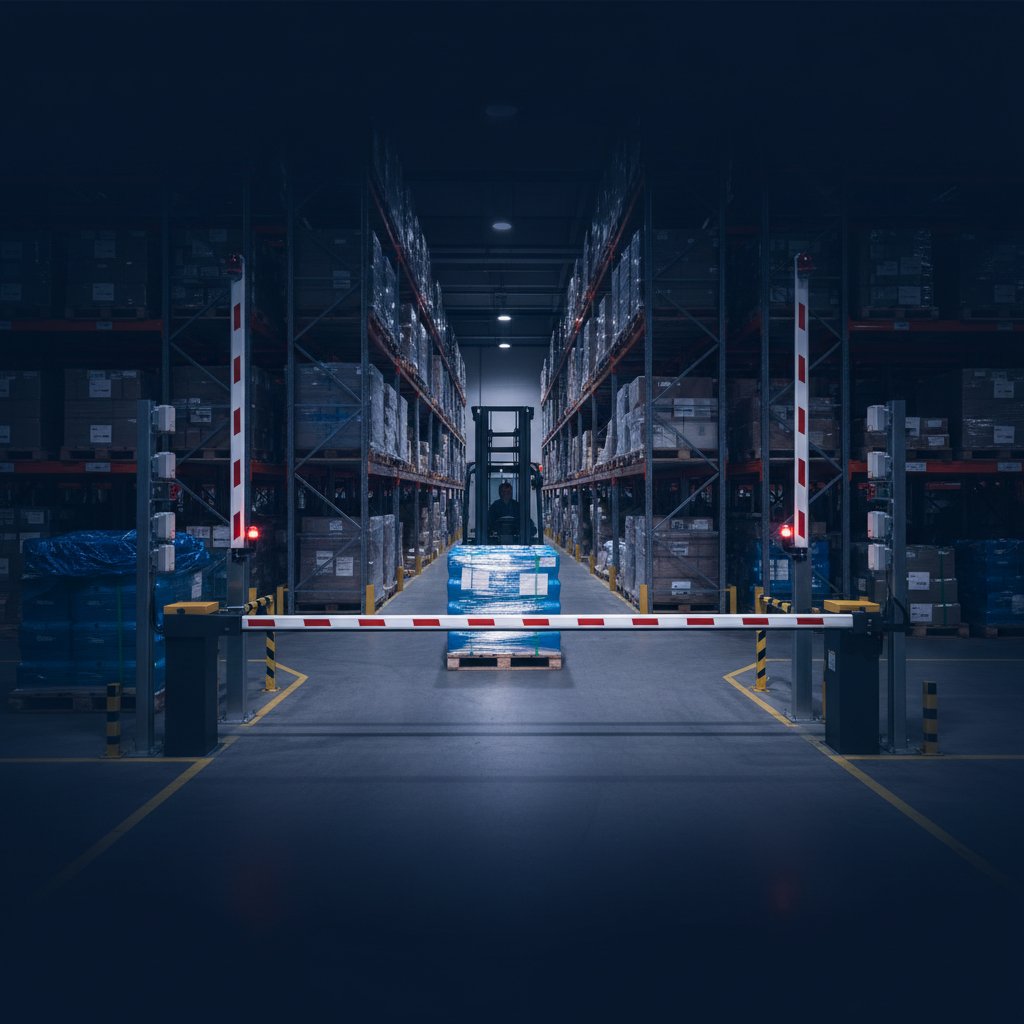
IES approaches dock safety as a traffic engineering problem: vehicle detection, controlled access, visual communication systems, and speed management integrated into one coordinated system.
02 — Deep Dive
What Integrated Safety Systems Does IES Install at Loading Docks?
IES engineers a complete dock safety system using multiple integrated components. Bay door LED indicators — green, amber, and red — communicate dock status to forklift operators approaching from the aisle side, preventing entry into a bay with an unsecured truck or an opening door.
Vehicle detection sensors confirm truck presence and secure positioning before the forklift entry signal activates. Traffic light systems at dock door approaches coordinate right-of-way between forklifts and dock workers.
Automated gate arms at pedestrian crossing points adjacent to dock doors lower during forklift movement and raise when the path is clear. Zone-based speed management reduces forklift speed in the dock approach zone automatically.
All components connect through Guardian and log every interaction for compliance documentation.
03 — Implementation
How Does IES Configure Dock Safety Systems Around Existing Operations?
Every dock operates on a different rhythm: shift schedules, truck arrival patterns, staging requirements, and the mix of operators and dock workers vary significantly between facilities. IES configures dock safety systems around your specific operational patterns rather than applying a generic solution.
During the traffic assessment, we document truck arrival volumes, forklift-dock interaction frequency, peak-hour patterns, and current incident history at each bay. Speed zone limits, bay indicator logic, gate arm trigger conditions, and vehicle detection parameters are all configured to match your dock workflow.
Systems can be staged by bay during installation to minimize operational disruption — active bays continue operations while adjacent bays are being configured.
Frequently Asked Questions
Get Started
Ready to eliminate your blind spots?
How it works
Answer 7 quick questions about your facility and get an instant risk score with tailored recommendations.
- Evaluate your facility type, fleet size, and traffic patterns
- Instant risk score from 1–10
- Tailored engineering control recommendations
Takes about 2 minutes · No obligation