01 — Pedestrian-Forklift Conflict Management
Warehouse Pedestrian Safety Systems
Engineering controls — gate arms, detection systems, speed management, and building-integrated alerts — that prevent forklift-pedestrian incidents rather than simply raising awareness.
01 — Pedestrian-Forklift Conflict Management
Where Do Forklift-Pedestrian Incidents Happen in Warehouses?
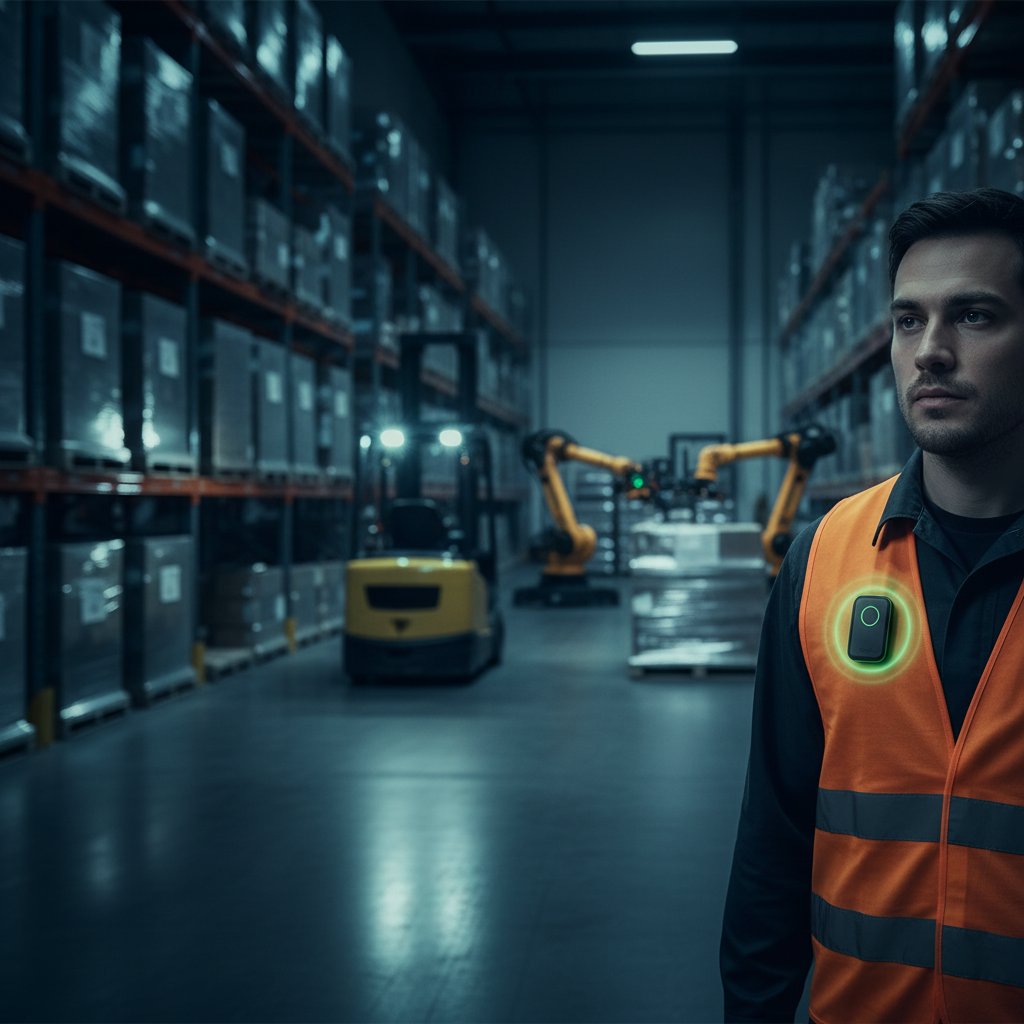
The majority of forklift-pedestrian incidents occur at predictable conflict zones: blind corners and intersections where sight lines are obstructed, loading dock areas with simultaneous vehicle and foot traffic, pedestrian crossing points on high-volume forklift aisles, and office and breakroom entry points where workers may emerge unexpectedly into forklift paths. These are not random locations — they are structurally determined by facility layout and traffic patterns.
Engineering analysis identifies them reliably, and engineering controls address them systematically. OSHA 1910.
178 data consistently shows these same location types at the center of serious forklift-pedestrian incidents, which is why IES begins every safety program with a structured facility traffic assessment that maps every conflict zone.
02 — Deep Dive
Why Are Engineering Controls More Reliable Than Behavioral Training Alone?
Training and awareness programs are necessary but insufficient as standalone safety measures. The evidence on behavioral safety interventions is consistent: training effects decay over time, high-workload conditions increase error rates regardless of training quality, visitors and contractors arrive without site-specific training, and no amount of training changes the physics of a forklift approaching a pedestrian who cannot see it.
Engineering controls — detection systems, automated speed management, gate arms, and visual alerts — do not depend on human memory or attention to function. They operate continuously, respond in under one second, and work regardless of whether the operator or pedestrian is paying attention at the critical moment.
03 — Implementation
How Does IES Design a Zone Management and Detection System for Your Facility?
Effective forklift-pedestrian engineering begins with a facility traffic assessment — a systematic walk of every conflict zone to characterize the traffic pattern and determine the appropriate control type for each area. High-volume pedestrian crossings on main forklift aisles receive full gate arm integration with traffic light systems and speed management.
Blind corners receive overhead projectors and automatic speed zone enforcement. Loading dock areas receive bay door indicator systems, vehicle detection, and coordinated access control.
Lower-traffic zones receive targeted controls sized to the actual risk level. After installation, Guardian's event data shows which zones generate the most proximity events, enabling ongoing refinement as operations change.
Frequently Asked Questions
Get Started
Ready to eliminate your blind spots?
How it works
Answer 7 quick questions about your facility and get an instant risk score with tailored recommendations.
- Evaluate your facility type, fleet size, and traffic patterns
- Instant risk score from 1–10
- Tailored engineering control recommendations
Takes about 2 minutes · No obligation