01 — Traffic Safety Engineering
Warehouse Traffic Safety Solutions
Engineering solutions that make forklift-pedestrian traffic safe. Detection, intervention, and building integration — systems that prevent incidents, not just report them.
01 — Traffic Safety Engineering
Why Is Traffic Safety an Engineering Problem?
Most facilities approach forklift-pedestrian safety with training, floor markings, and warning signs. These measures are necessary but they are not sufficient to prevent incidents.
OSHA data shows that 80% of forklift incidents still involve a pedestrian despite widespread safety training programs. The gap is engineering controls — physical systems that detect hazards, intervene automatically, and prevent incidents regardless of whether operators and pedestrians are paying attention at any given moment.
Relying on human behavior in every interaction is not a reliable strategy in a high-activity warehouse environment. IES closes that gap with detection sensors, automated speed management, gate arms, floor projectors, and building-integrated controls that work together as one engineered system.
The result is consistent, predictable traffic safety that does not depend on individual judgment or vigilance.
02 — Deep Dive
How Does Detection Lead to Automatic Intervention?
Detection without intervention is just a notification system — it tells you something happened, after it happened. IES systems do not just detect hazards, they intervene before incidents occur.
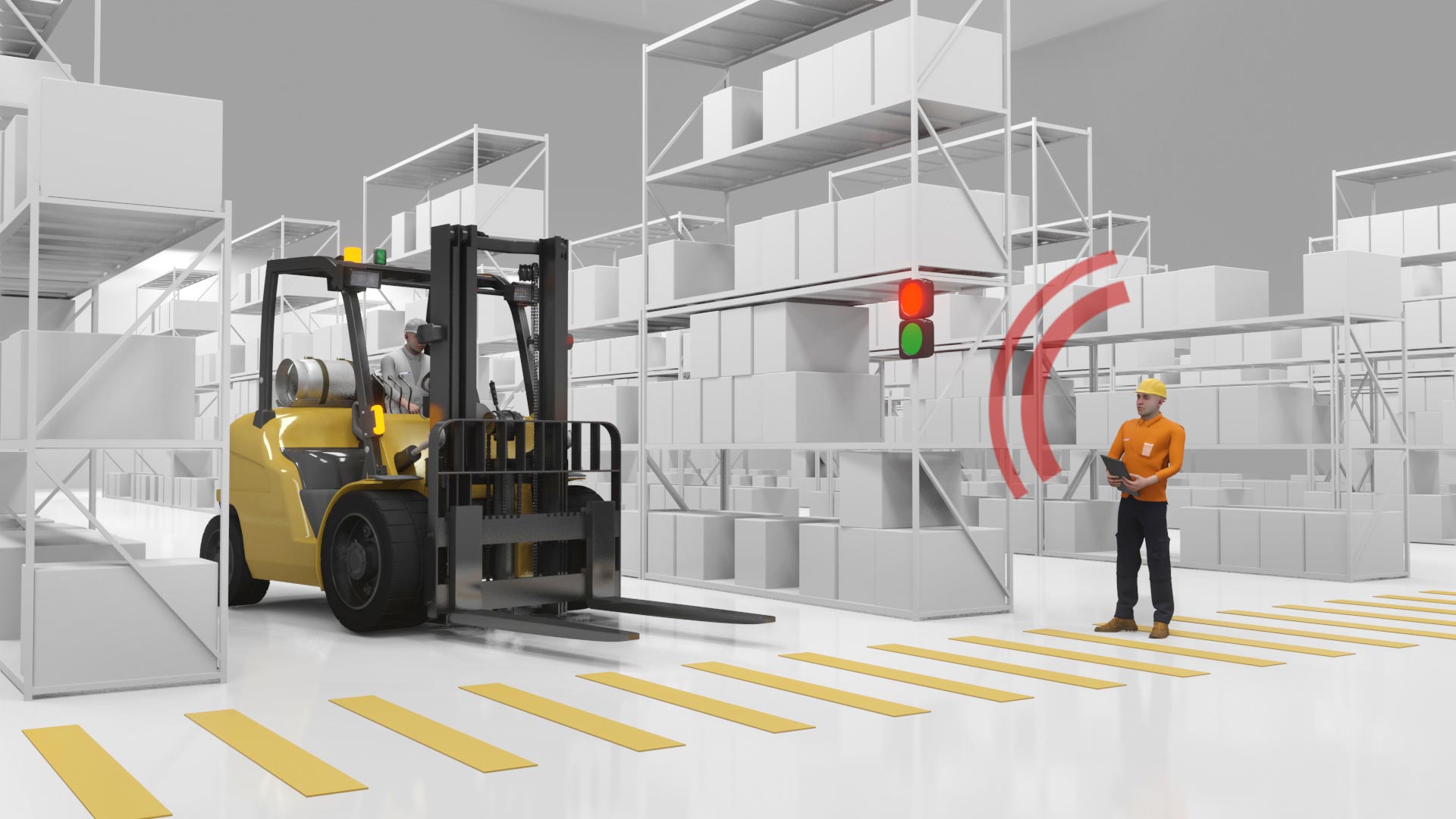
When a pedestrian is detected in a forklift path, the system simultaneously slows the forklift to the zone speed limit, activates overhead visual and audio warnings, locks gate arms to prevent further pedestrian access, and projects hazard zones onto the floor. All of these responses happen in under a second.
The response is automatic, immediate, and coordinated across every safety component in the affected zone. No operator action is required and no human judgment is involved in the safety response.
This is the difference between a detection system and a safety system.
03 — Implementation
How Does Building Integration Work?
The difference between IES systems and standalone safety sensors is building integration. IES connects detection, controls, and facility infrastructure into one coordinated safety network.
Gate arms, traffic lights, dock doors, floor projectors, and overhead beacons are all wired into the same system. When a forklift approaches a blind corner, the entire intersection responds — not just the truck's onboard sensor.
The gate arm lowers. The overhead warning light activates.
The floor projector casts a red hazard zone. Traffic from the crossing direction receives a stop signal.
All of this happens simultaneously because every component is part of one integrated system. IES handles the full integration: facility assessment, system design, installation, and commissioning.
This is what separates engineered traffic safety from a collection of bolt-on sensor products.
Frequently Asked Questions
Get Started
Ready to eliminate your blind spots?
How it works
Answer 7 quick questions about your facility and get an instant risk score with tailored recommendations.
- Evaluate your facility type, fleet size, and traffic patterns
- Instant risk score from 1–10
- Tailored engineering control recommendations
Takes about 2 minutes · No obligation