01 — Blue Spot Warning Technology
Forklift Blue Spot Warning Systems & LED Safety Lights
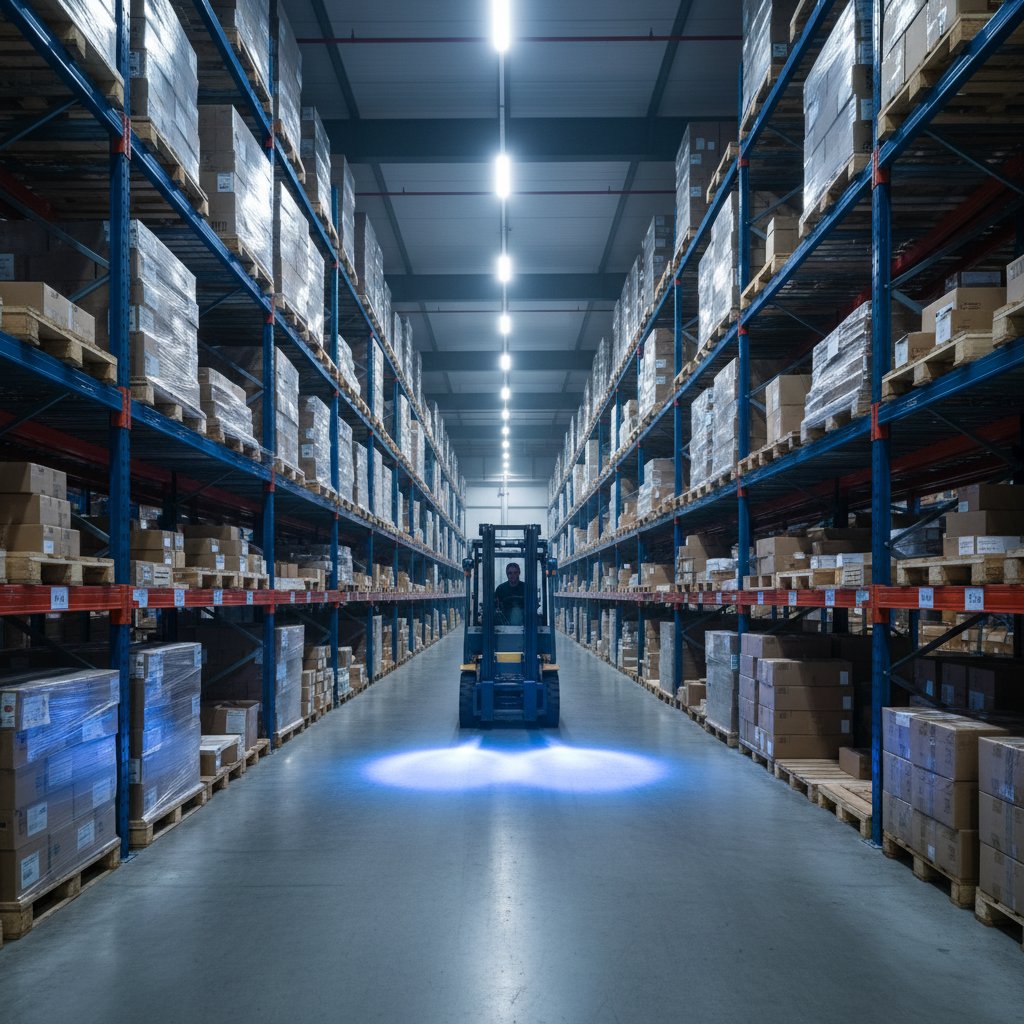
Forklift blue spot lights project a visible warning on the floor before the forklift arrives — alerting pedestrians at blind corners and intersections where they cannot yet see the approaching equipment.
01 — Blue Spot Warning Technology
What Are Forklift Blue Spot Lights and How Do They Work?
Forklift blue spot lights are LED warning lights mounted on forklifts that project a bright blue spot on the floor 10 to 20 feet ahead of or behind the moving vehicle. The purpose is clear: warn pedestrians that a forklift is approaching before the forklift is visible around a corner or racking end.
The blue color is selected for high visibility against typical warehouse floor surfaces and to distinguish the forklift warning from other facility lighting. Blue spots project continuously whenever the forklift is in operation, giving pedestrians time to see and respond before the vehicle arrives at their location.
In Guardian-integrated facilities, blue spot lights can pulse at different rates based on proximity conditions — providing urgency information to pedestrians in addition to directional warning. IES selects mounting positions and beam angles based on each facility's aisle geometry and blind spot profile.
02 — Deep Dive
What Types of Forklift Blue Light and Warning Projection Systems Are Available?
Blue spot lights are the most common configuration — a single bright spot projected on the floor in the direction of forklift travel, typically 10–20 feet ahead or behind the machine. Red zone lights project a rectangular warning zone around the forklift perimeter, marking the full danger area during operation — useful in open areas where pedestrians may approach from multiple directions.
Arc warning lights project a curved pattern along the forklift's travel path, giving pedestrians a visible arc of the vehicle's sweep area. Rear-mounted blue spots warn pedestrians behind reversing forklifts, which are involved in a disproportionate share of warehouse incidents.
Some installations use front and rear blue spots simultaneously, providing continuous warning regardless of forklift travel direction. IES selects the projection type and configuration appropriate to each zone's visibility requirements and pedestrian traffic pattern.
03 — Implementation
How Do Standalone Blue Lights Compare to Integration With Detection Systems?
Standalone blue spot lights provide a meaningful improvement over no visual warning — a pedestrian who sees the blue spot knows a forklift is approaching and can take evasive action. But standalone lights run continuously regardless of whether a pedestrian is present, which can contribute to alert fatigue over time.
In a Guardian-integrated facility, blue spot lights connect to the detection and speed management platform. When a pedestrian fob is detected in the forklift's zone, the blue spot activates at a pulsing rate that communicates urgency — different from the steady projection during normal operation.
The forklift simultaneously slows to a pre-configured safe speed and the event is logged. This coordinated response means the blue spot light works as part of a system that also intervenes, rather than simply alerting without changing operational outcomes.
Frequently Asked Questions
Get Started
Ready to eliminate your blind spots?
How it works
Answer 7 quick questions about your facility and get an instant risk score with tailored recommendations.
- Evaluate your facility type, fleet size, and traffic patterns
- Instant risk score from 1–10
- Tailored engineering control recommendations
Takes about 2 minutes · No obligation